Not too long ago, neither of us could run even one mile without feeling awful. It took time, but today running is one of our favorite ways to exercise and recently a great way to see new places. My friend Christina (who just visited us in Dar and Zanzibar!) was the first person I remember who traveled all over the US as a sports tourist and we are starting to understand why she loves it so much. The two runs we did this June were challenging but rewarding because they pushed us to see places we have never seen, meet some really cool people, and also contribute financially to some great causes.
The Bagamoyo Historical Race came first and we ran the 10K alongside our friend Molli and a few hundred Tanzanians who arrived before sunrise to support the cause of preventing non communicable diseases, which are on the rise across the country. Bagamoyo is a small, coastal town just north of Dar with quiet beaches and a lot of history (a famous trade town, including slave trade). The run took us down quiet alleys with colonial buildings and old mosques, but also through newer parts of town where we were watched and cheered-on by people going about their normal Sunday morning routines – building small cooking fires, walking to church, repairing bicycles, building dhow boats. It was a fun run and I was again happy to see quite a few girls and women participate. However, there were obviously not very many women because Molli and I finished in the top 10 women, something I will never be able to say again! At the finish line was an aerobics class to stretch everyone and bring us together one more time. Why is this not standard at all race finishes?
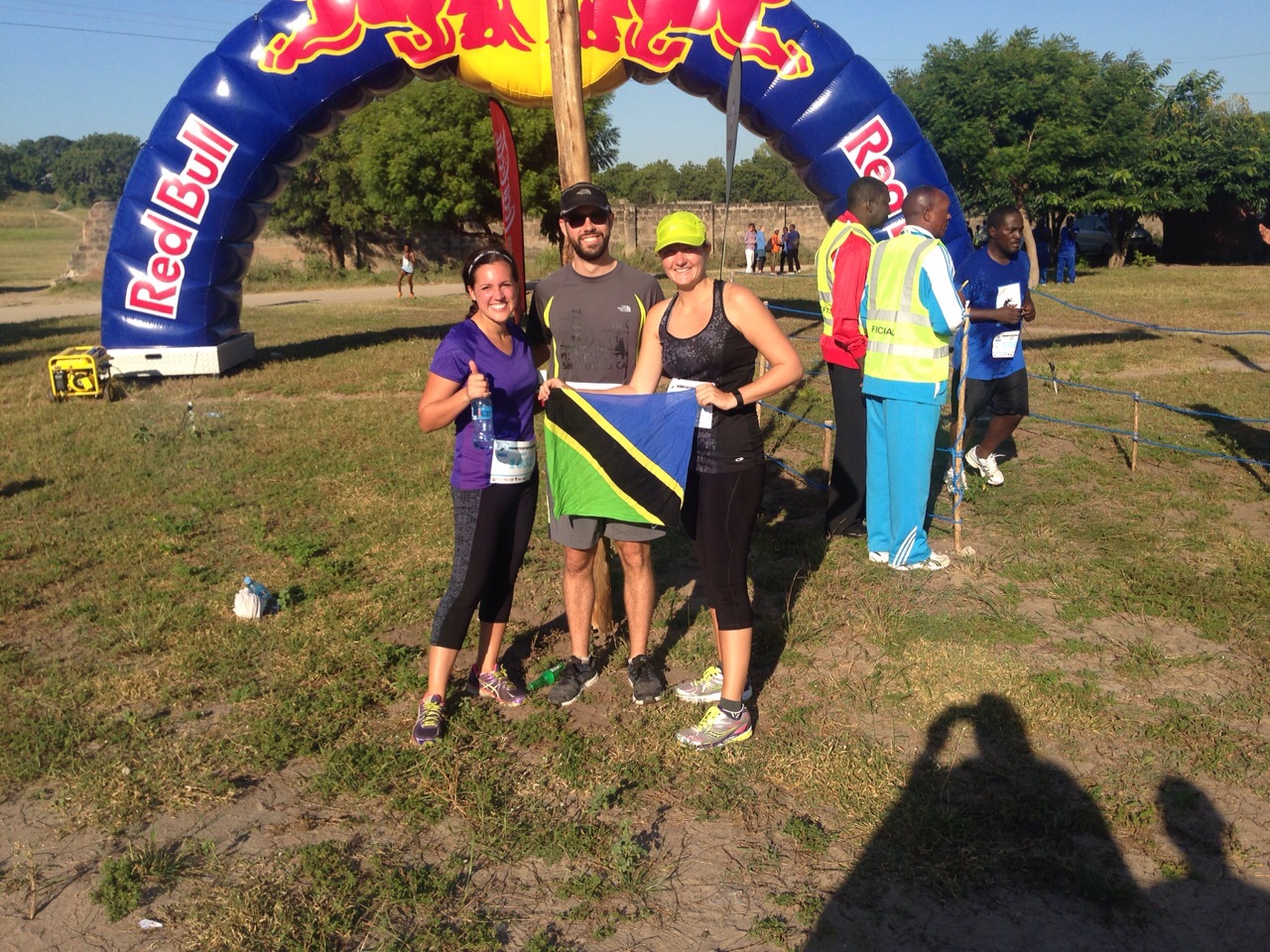
Bagamoyo Run with upside-down Tanzania flag
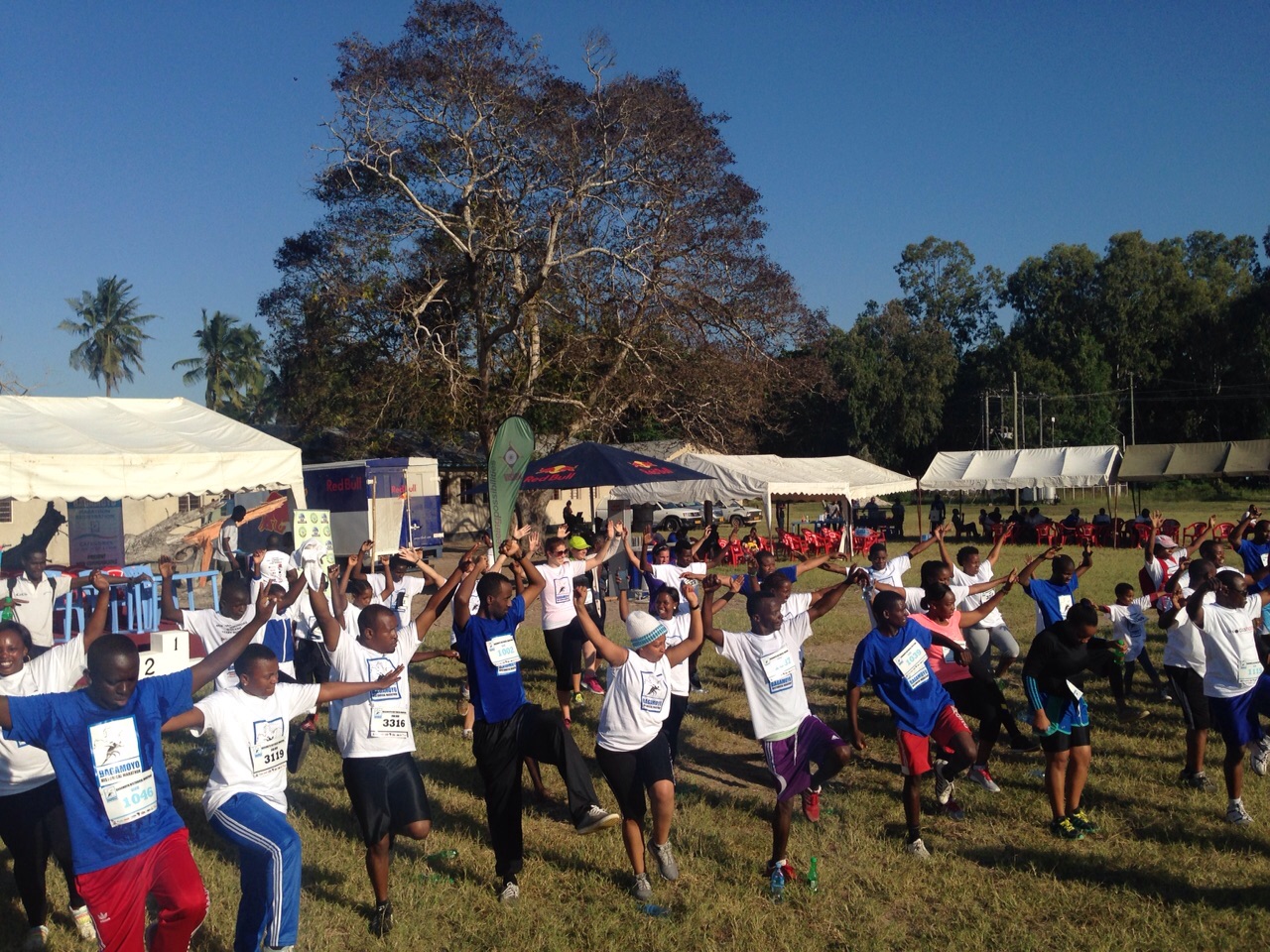
Post-run aerobics! (we’re in the back)
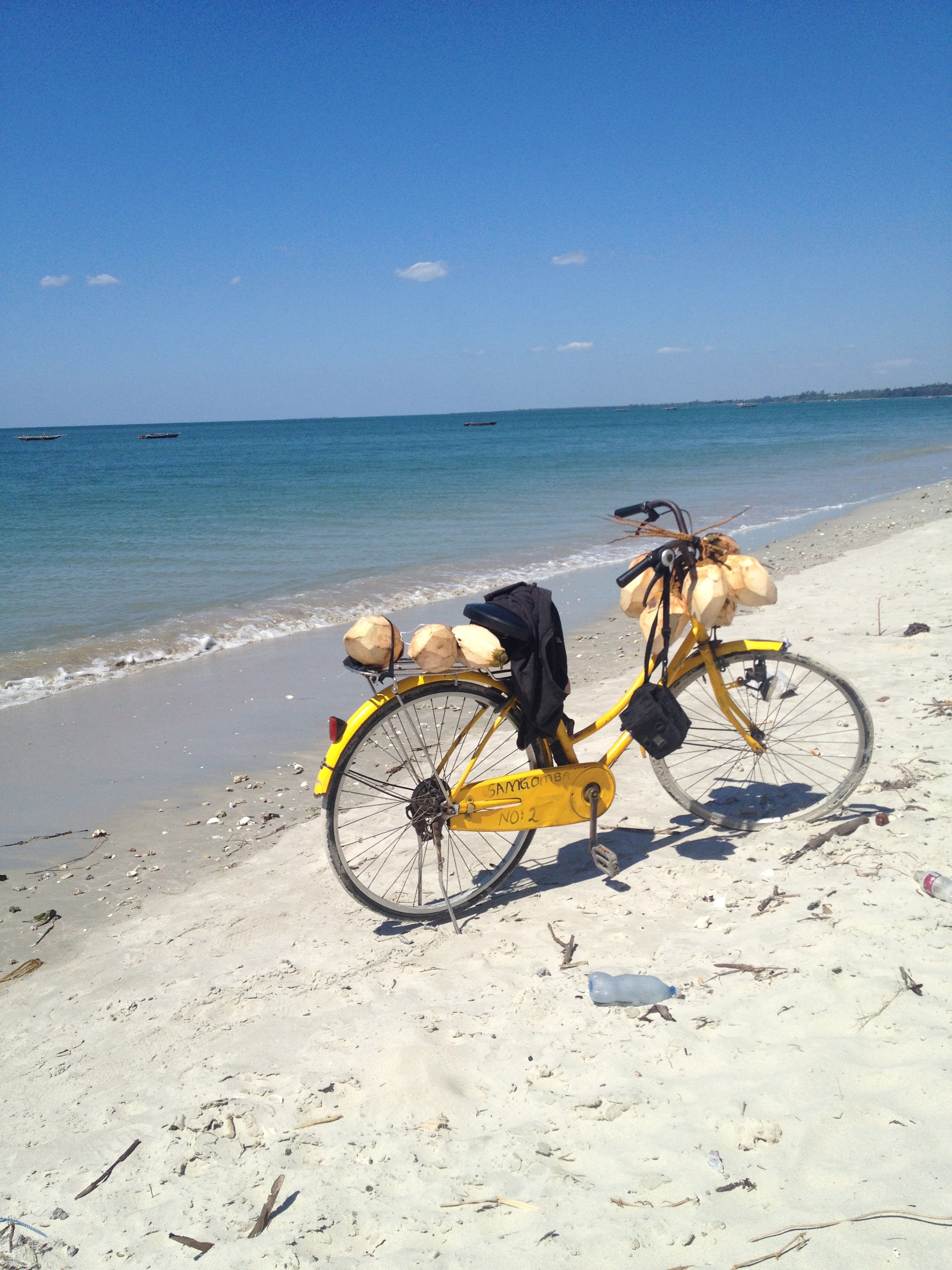
Beautiful Bagamoyo beach
Next came the Safaricom Marathon (we did the half, or 13.1 miles) in the Lewa Wildlife Conservancy, located in central Kenya, and recently famous as the royal engagement spot. This is considered one the top runs in the world for a few reasons – it’s freaking hard, it’s beautiful, it’s not easy to register, and you see wildlife while you run. Only around 1,200 are allowed to run and we were lucky to be invited by the GIZ Kenya Water Programme to join their team of 30 people. The race draws people from all over the world who want an opportunity just to visit the exclusive reserve (it is the only weekend of the year when private camping is allowed) and see some of the best distance runners from Kenya in action. One thing I loved is the general excitement – everyone is so happy to be there, many bring their families, and it’s not really about your running time for most people. This last one was good for us because it was MUCH harder than expected.
Once camp was set-up, we did a game drive and saw several black rhinos, endangered Grevy’s zebra, and oryx (all firsts for Nathan). The run began early the next morning, after the course was first cleared by helicopters and game rangers of any dangerous animals such as predators or buffalo. Lining up at the start, it was clear this was a much different race than Kilimanjaro. There were many more non-nationals at this race and almost every person I saw seemed to have done some training or was at least dressed in running gear. Throughout the run, the heat, sun, elevation (5,000′), and incredibly dry air wore everyone down in a way I’ve never seen in any other run. There were water stations every 2.5 km and I had to stop at every single one, but I seemed to still only be sweating salt. It. Was. Really. Dry. I had a great morning and got awesome views of Mt. Kenya, saw some giraffe and zebra, got passed by the top marathon men, and came across the finish just after the number one marathon woman (yes, that means she ran twice as far as me in the same amount of time) which meant lots of people were cheering as I came through.
However, it was a simple moment that was actually my favorite of the entire experience. I was running beside two Kenyan men when we all saw a male ostrich about 100 yards away. They were not sure if is was an ostrich because they had never seen one before so I taught them the few things I know about ostriches while they stared at the giant bird in amazement. To me, that moment of connection is what conservation work must have not just to be successful but to even matter. If no one cares about an ostrich, why protect it? Kenya’s tourism industry has suffered in recent years (and the security in Nairobi and at the race reminded me how lucky we are to live in Dar), and this marathon is a much needed way to raise awareness about conservation issues, introduce hundreds of local people and tourists to a unique park, support the local economy, and raise money for many projects that help humans and wildlife (including health clinics and education programs). In its 16 years, the Safaricom Marathon has raised $5 million for such projects and I hope it will only continue to grow.
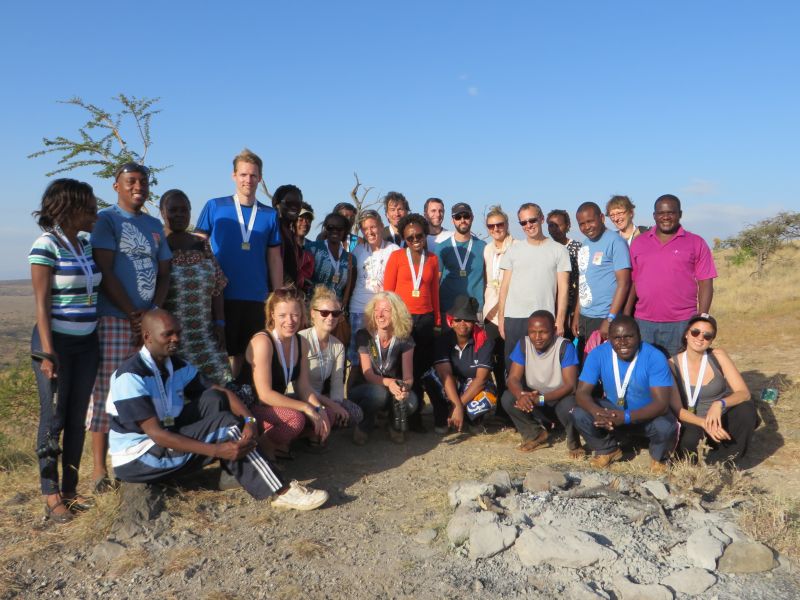
Tired but happy GIZ Water Team after the run!
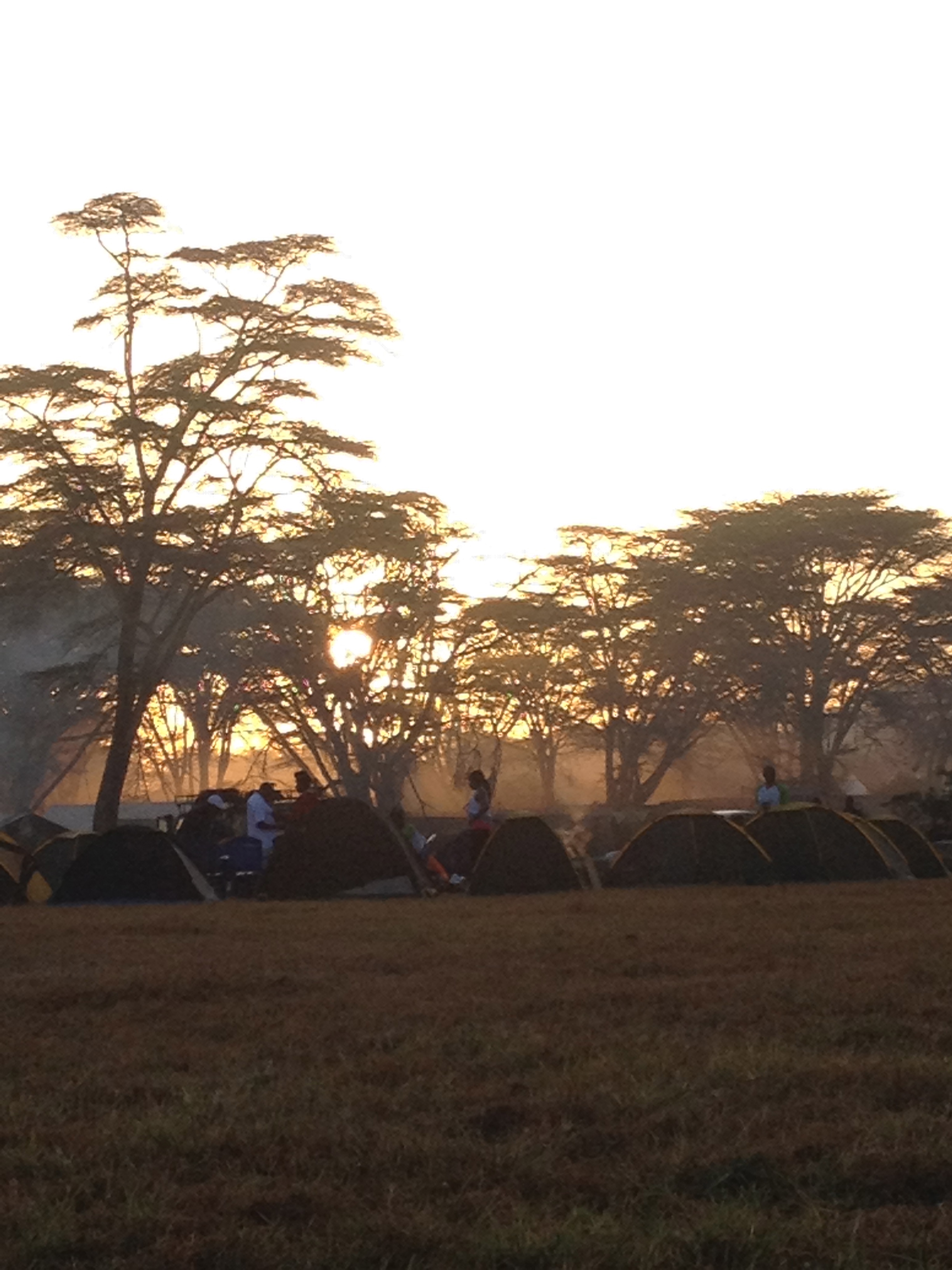
The campsite on the morning of the race
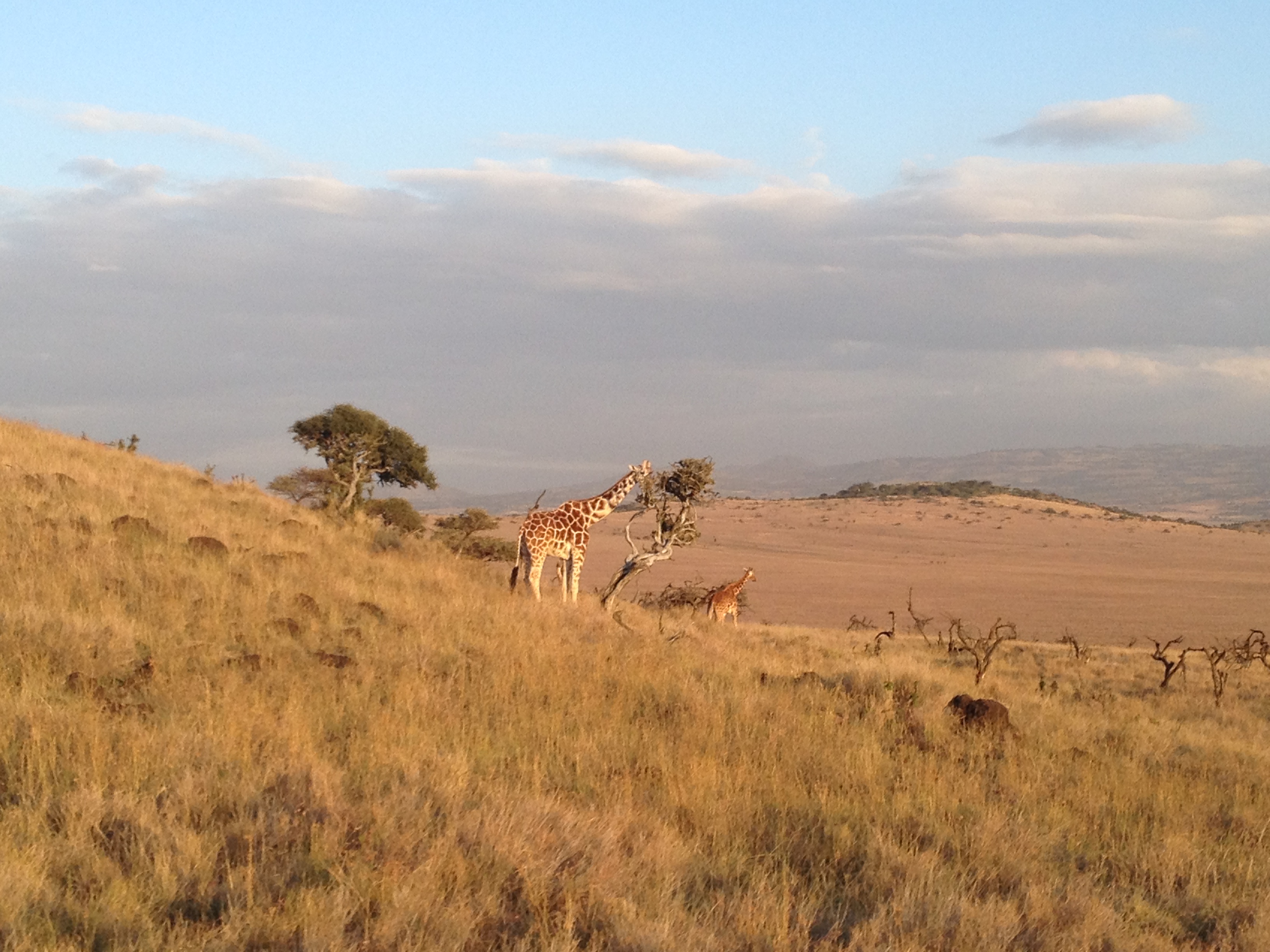
I will always love them
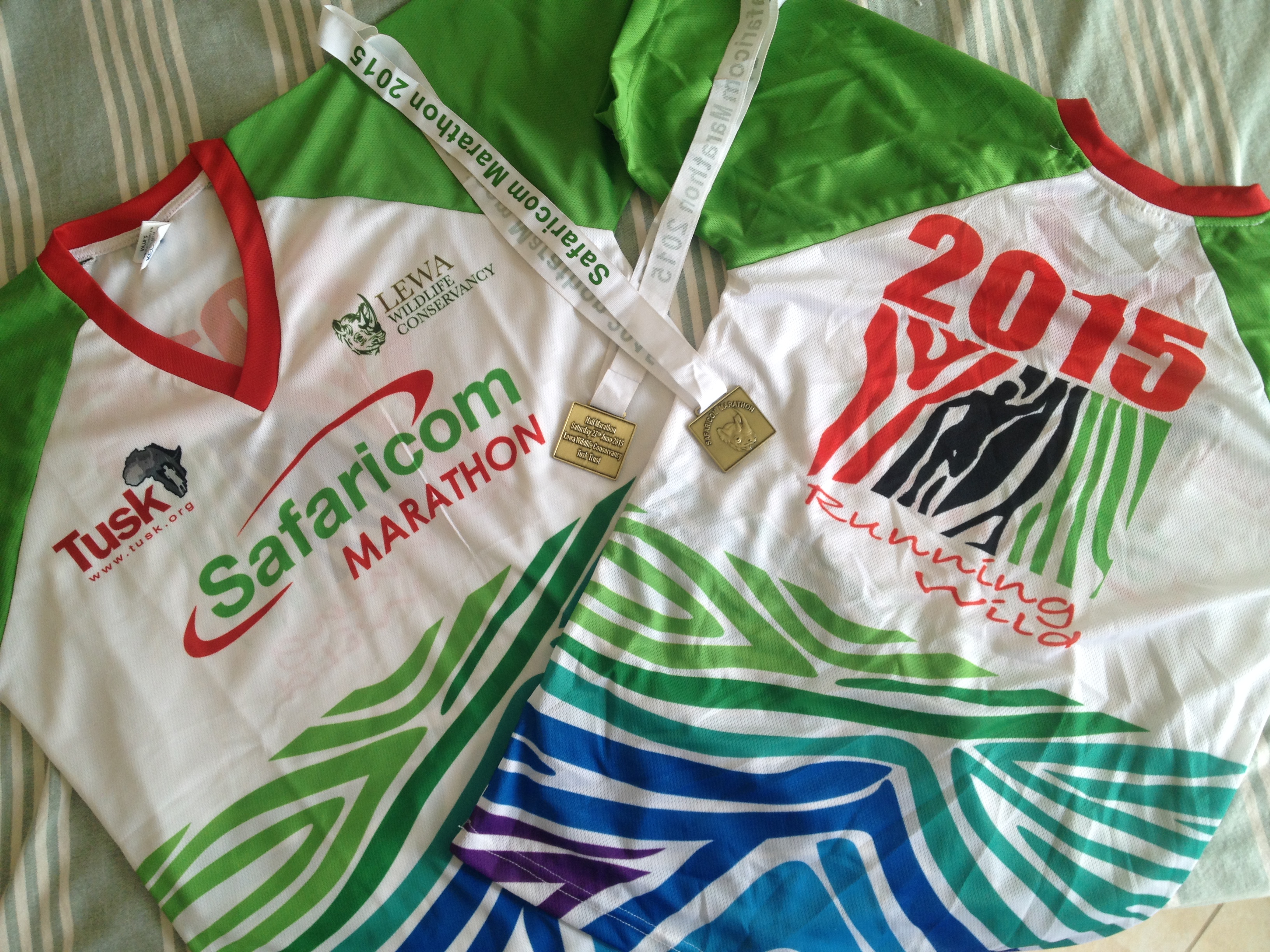
We ran, and it was wild
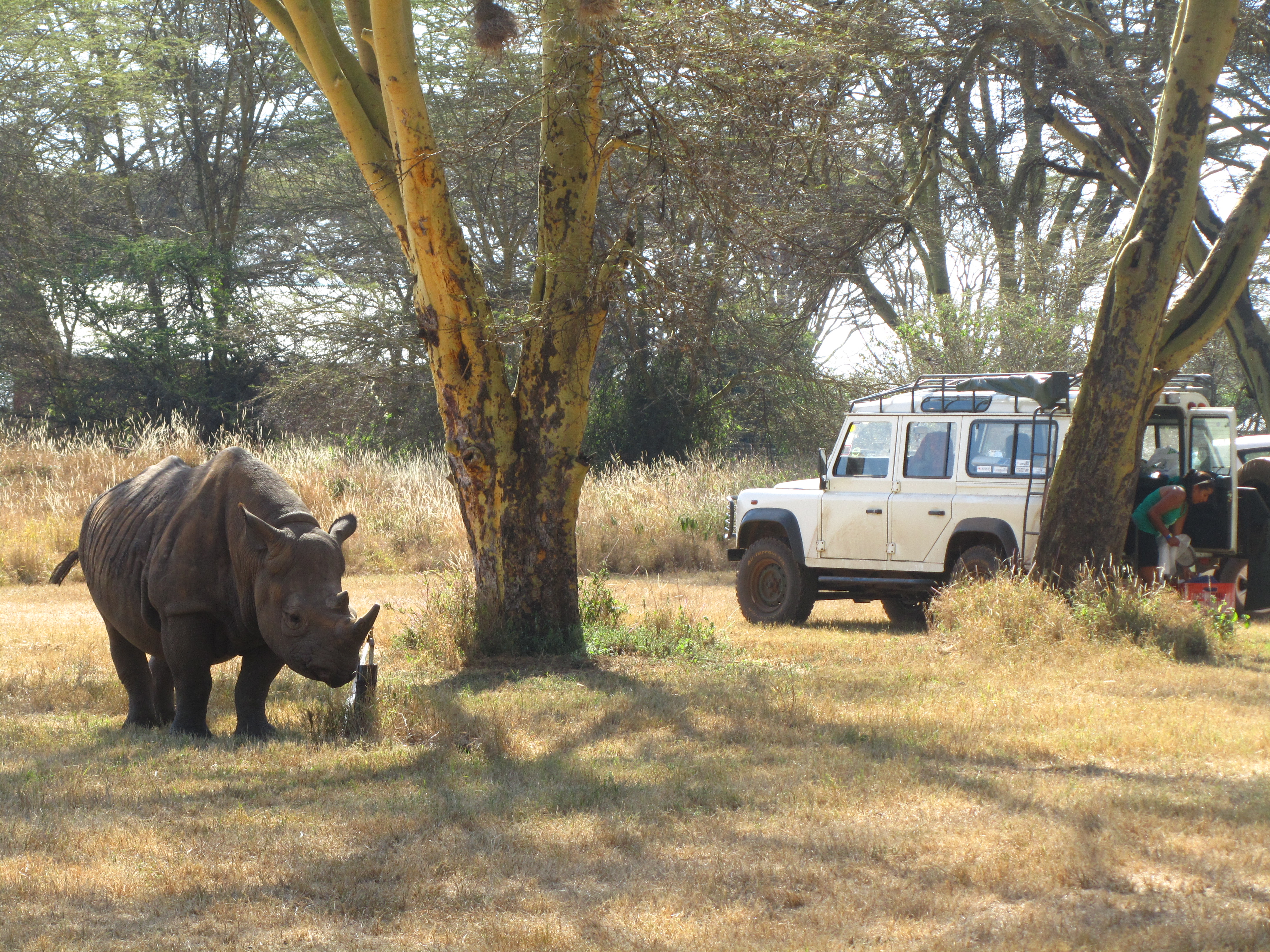
A smart rhino in camp using the spigot (we are not sure why it is so tame though)
NERD ALERT:
According to Save the Rhino, there are just over 5,000 black rhinos in Africa today. Their biggest threat is poaching for their horns, which are used in traditional medicine and displayed as status symbols in homes in East Asian countries. Lewa has over 70 of these amazing animals and not a single one was lost to poaching in 2014.
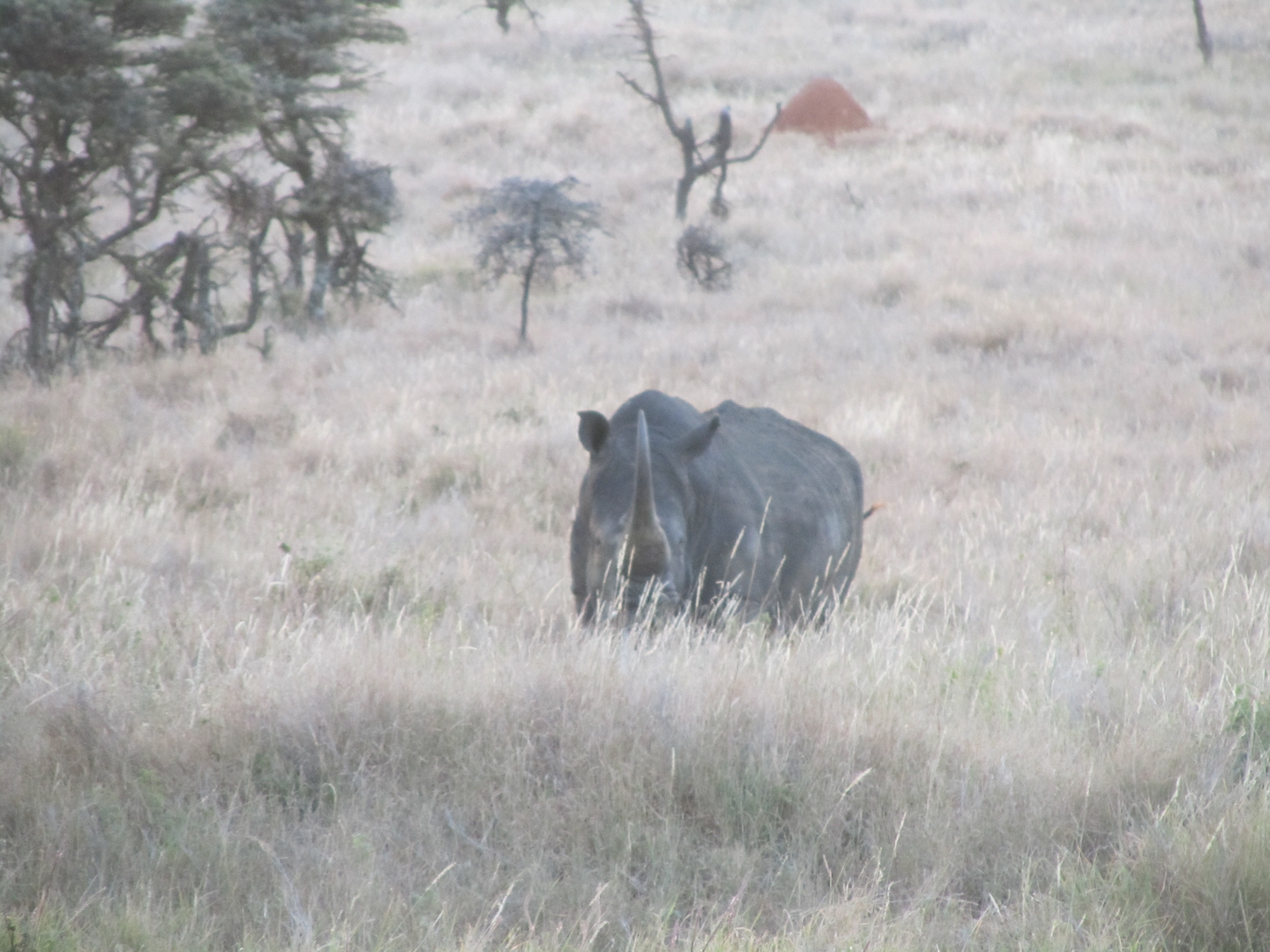
Giant boulder? Nope. It’s a black rhino – one of the 9 we saw.
 Karibuni Vietnam, Y'all
You all have such a cool life! I still hope to visit Africa some day. I’m proud of all the work you are doing! Enjoy! Love the blog!
Thanks Jenny! You are welcome to visit us anytime. Have a great summer with those 2 cutie kids!
Pingback: Top 15 of 2015 | Karibuni Tanzania, Y'all